


Perimenopause Treatment in Denver, CO
The Best Perimenopause Treatment in Denver, CO
Perimenopause is the transition before menopause — often starting in your 40s — when shifting estrogen and progesterone can trigger irregular periods, hot flashes, disrupted sleep, mood changes, and brain fog. At Cunningham Clinic in Denver's Cherry Creek neighborhood, nurse practitioner Kimberly Cunningham helps women understand what's happening and build a conservative, individualized plan to feel like themselves again.
Because no two women experience perimenopause the same way, there's no single solution that fits everyone. Kimberly takes the time to understand your symptoms, review your bloodwork, and learn about your health history before recommending anything. From there, she may suggest options like bioidentical hormone replacement therapy (BHRT)—including Biote® pellet therapy—alongside targeted supplements and lifestyle adjustments to help restore balance. Every plan is designed around your body, your goals, and your comfort level, with ongoing check-ins to make sure your treatment is working and adjusted as your needs change. The result is care that meets you where you are and helps you move through this stage with confidence.
Perimenopause treatments in Denver, CO done right
Perimenopause is the natural transition leading up to menopause, often beginning in your 40s, when shifting estrogen and progesterone levels start to change how you feel day to day. You might notice irregular periods, hot flashes, disrupted sleep, mood changes, or moments of brain fog — and while these symptoms are completely normal, that doesn't mean you have to push through them alone. At Cunningham Clinic in Denver's Cherry Creek neighborhood, you'll find clear answers and conservative, individualized treatment options designed to help you feel like yourself again.
Feel like yourself again.
What is perimenopause?
Perimenopause is the years-long lead-up to menopause, when your ovaries gradually produce less estrogen and progesterone and your hormone levels fluctuate from month to month. It typically begins in your 40s — sometimes in the late 30s — and lasts an average of four to eight years, ending twelve months after your final period, which is the point we call menopause. Because hormone levels rise and fall unpredictably during this stage, symptoms can come and go and change over time. That is also why perimenopause is often missed or mistaken for stress, thyroid problems, or simply “getting older.” A provider who treats hormone health every day can help you tell the difference.
Book your Appointment
Feel like yourself again.
Perimenopause, explained clearly.
Perimenopause, explained clearly.
Common perimenopause symptoms
Perimenopause affects every woman differently, but most symptoms trace back to fluctuating estrogen and progesterone. The most common signs we see in Denver patients include:
• Irregular periods — cycles that grow shorter, longer, heavier, or lighter
• Hot flashes and night sweats
• Trouble sleeping, waking at night, or insomnia
• Mood changes — new anxiety, irritability, or low mood
• Brain fog, forgetfulness, and trouble concentrating
• Fatigue and lower energy than usual
• Weight gain, especially around the midsection
• Lower libido and changes in sexual desire
• Vaginal dryness or discomfort with intimacy
• Stronger PMS, breast tenderness, or new headaches
• Joint aches and stiffness
You do not need to have every symptom — or even a missed period — to be in perimenopause. If several of these sound familiar and are affecting your daily life, it is worth an evaluation.
Hot flashes? Let's talk.
When should you see a provider about perimenopause?
See a provider when symptoms begin to interfere with your sleep, work, mood, or relationships— you do not have to wait until they become severe. Early, conservative care can ease the transition and rule out other causes, such as thyroid disorders or anemia. It is especially worth booking a visit if your cycles have changed noticeably, if hot flashes or night sweats disrupt your sleep, if your mood feels unlike yourself, or if you want a clear,science-based explanation of what is happening in your body. Our team is bilingual (English and Spanish), so you can have that conversation in the language you are most comfortable with.
Because no two women move through perimenopause in quite the same way, there is no single treatment that works for everyone — and that is exactly the point. At Cunningham Clinic, Kimberly Cunningham takes a conservative, individualized approach, starting with a careful review of your symptoms, bloodwork, and health history before making any recommendations. From there, she may suggest bioidentical hormone replacement therapy (BHRT) — including Biote® pellet therapy — paired with targeted supplements and small lifestyle adjustments to help bring your hormones back into balance. Every plan is built around your body, your goals, and your comfort level, with regular check-ins to make sure your treatment is working and to fine-tune it as your needs change. The result is care that meets you where you are and helps you move through this stage feeling steady, supported, and like yourself again.
Hot flashes? Let's talk.
Care built around you.
Care built around you.
How we treat perimenopause at Cunningham Clinic
We begin with a thorough evaluation and the right lab work, then build a plan tailored to your symptoms, history, and goals — always using the minimum intervention needed to get you feeling well. Your plan may include any combination of the following:
Comprehensive evaluation and lab testing
We review your symptoms, cycle history, and health background, and order targeted bloodwork, so your plan is based on data — not guesswork.
Bioidentical hormone therapy, including Biote pellet therapy
When appropriate, hormone therapy can steady the fluctuations that drive hot flashes, sleep loss, and mood changes. As a Biote Certified clinic, we offer bioidentical hormone options — including pellet therapy — alongside other delivery methods, matched to what fits your body and your preferences.
Cycle and progesterone support
For some women, targeted progesterone or other cycle-focused options improve sleep and ease heavy or unpredictable bleeding during the transition.
Non-hormonal and lifestyle options
Not everyone wants or needs hormones. We also offer non-hormonal approaches and practicalguidance on sleep, nutrition, strength, and stress that meaningfully improve perimenopausesymptoms.
Ongoing monitoring
Perimenopause changes over time, so we follow up, recheck labs as needed, and adjust your plan as your body shifts toward menopause.
book now
What to expect at your first visit
1. Conversation: we listen to your symptoms, history, and goals — no rushing, nodismissing.
2. Evaluation: we order targeted lab work to understand your hormone levels and rule outother causes.
3. Plan: together we choose a conservative, individualized approach — hormonal, non-hormonal, or both.
4. Follow-up: we monitor your progress and adjust as your body changes.
Frequently Asked Questions

Ready to feel like yourself again?
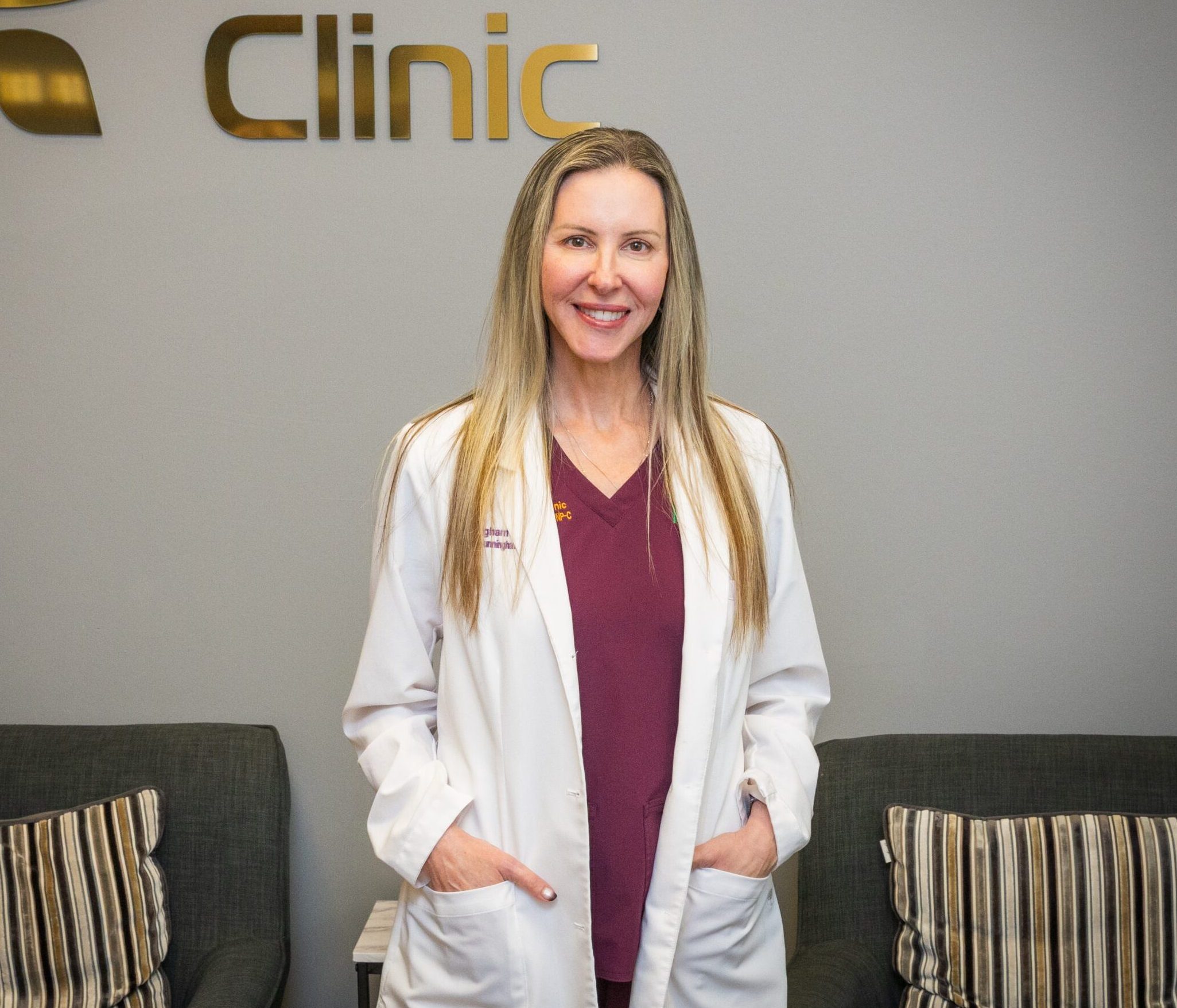
Kimberly Cunningham, MSN, APRN, ANP-C, a nurse practitioner and adjunct faculty member at the University of Colorado College of Nursing lead Cunningham Clinic. That academic-grade training, combined with a conservative treatment philosophy, means you get hormone care that is both credentialed and measured — never one-size-fits-all.
• Provider-led, evidence-aligned hormone care — not a med-spa add-on
• Biote Certified clinic offering bioidentical hormone options
• Conservative philosophy: the minimum effective intervention, individualized to you
• Bilingual team (English /Españoll)
• Convenient Cherry Creek location at 695 S Colorado Blvd, serving Wash Park, Bonnie Brae, Hilltop, and the greater Denver metro