

Endometriosis & Hormone Health
A Patient-Friendly Guide to Symptoms, Treatment and GLP-1 Medications.
Learn about endometriosis, its symptoms, and treatment options. Discover emerging research on GLP-1 levels in endometriosis and how GLP-1 medications may support metabolic and inflammatory health.

What is Endometriosis?
A familiar tissue, in an unfamiliar place.
Endometriosis is a chronic condition where tissue similar to the lining of the uterus grows outside the uterus — on the ovaries, pelvic wall, and beyond.
That displaced tissue responds to the monthly hormonal cycle the same way the uterine lining does — it thickens, breaks down, and bleeds. With nowhere for that blood to go, the cycle produces inflammation, pain, and over time, scar tissue.
Common Symptoms of Endometriosis
The signs we see, again and again.
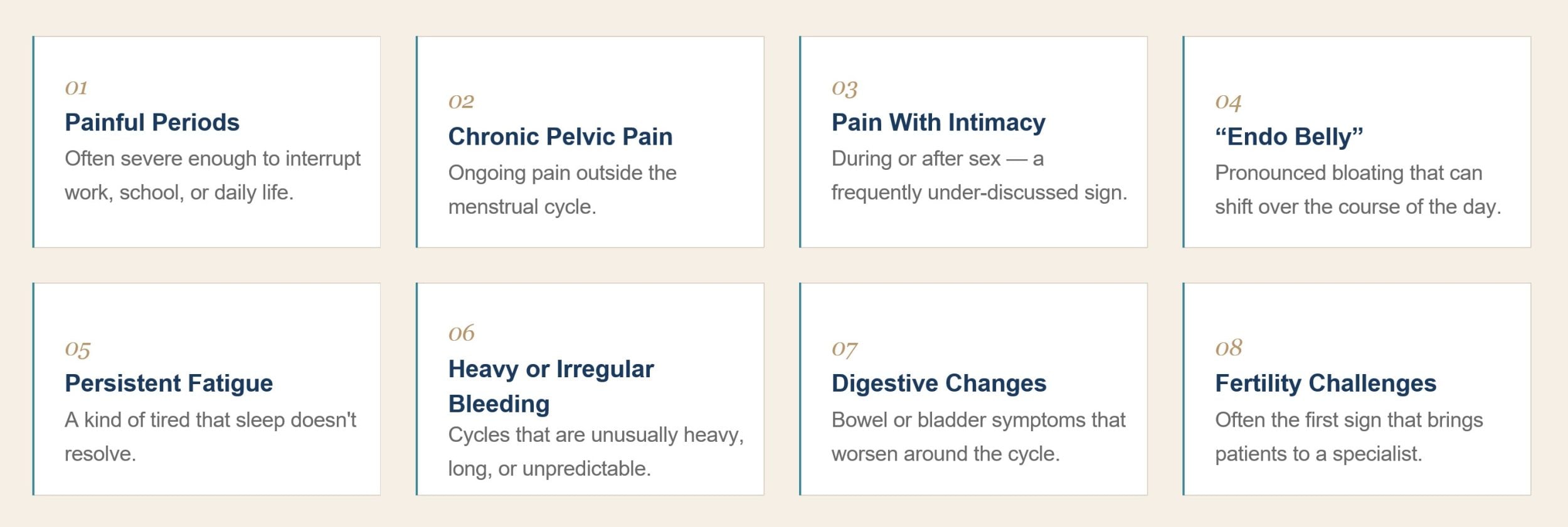
Symptoms vary widely – some people have severe pain, wile other have minimal symptoms. Symptoms can include:
A Key Insight: Endometriosis Is an Inflammatory Condition
Endometrios isn’t only a reproductive issue – it involves the immune system, chronic inflammation, and the body’s metabolism.
Researchers are increasingly studying peritoneal fluid — the fluid in the pelvic cavity where lesions live — to understand how hormones, immunity, and inflammation interact in this disease.
The Inflammation Cycle
A loop that can reinforce itself.
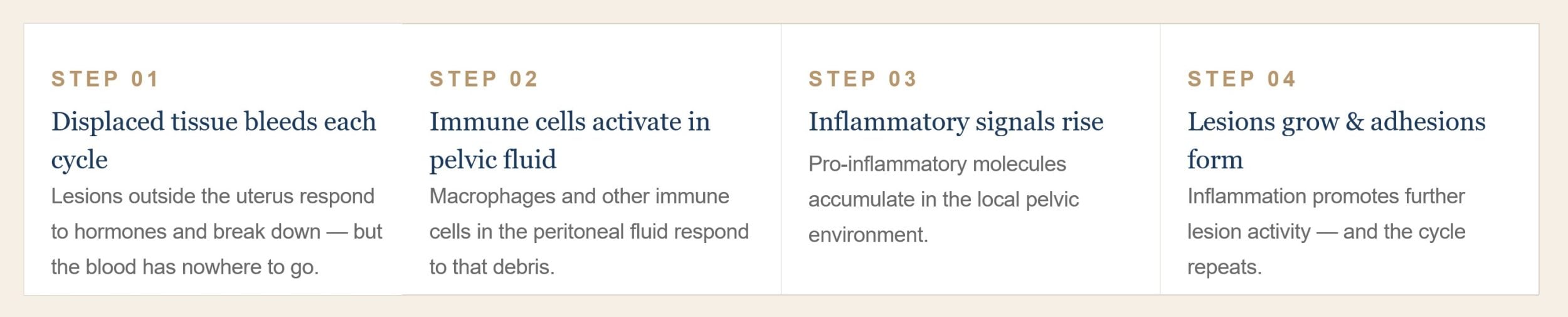
Breaking this loop — not just managing pain in the moment — is what modern endometriosis care is trying to do.
The emerging GLP-1 research.
People with endometriosis may have lower levels of GLP-1 in their peritoneal fluid.
What this study shows:
A study comparing women with endometriosis to controls found that GLP-1 levels in peritoneal fluid were significantly reduced
- Other metabolic hormones (like ghrelin and glucagon) were also decreased
- These changes were associated with increased inflammatory activity in immune cells (macrophages)
What this study matters:
GLP-1 is not just a “weight loss hormone.” It also:
- Plays a role in inflammation regulation
- Interacts with the immune system
- Influences metabolic balance
Lower GLP-1 levels in the pelvic environment may contribute to:
- Increased inflammation
- Altered immune responses
- Progression of endometriosis lesions (still being studied)
- Based on published research comparing women with endometriosis to control groups. Findings are from relatively small studies and are not yet the basis for clinical treatment decisions. This content is educational and not a substitute for individual medical advice.
Effects of Glucagon-Like Peptide-1 Receptor Agonists (GLP-1RAs) on Endometriosis Symptoms Management and Quality of Life: An International Survey Study
The hidden impact of GLP‐1 receptor agonists on endometrial receptivity and implantation
AN IMPORTANT CLARIFICATION
It isn’t accurate to say people with endometriosis have no GLP-1. The research shows reduced levels — not a complete absence.
WHY THIS MATTERS
The science is still early — a promising signal, not a settled conclusion.
STUDY CONTEXT
Findings come from relatively small studies of peritoneal fluid.
WHAT’S NEXT
More research is needed before final clinical conclusions can be drawn.
HOW GLP-1 MEDICATIONS WORK
Mimicking a hormone the body already makes.
Medications like semaglutide and tirzepatide are “GLP-1 receptor agonists” — they mimic the action of the body’s own GLP-1.
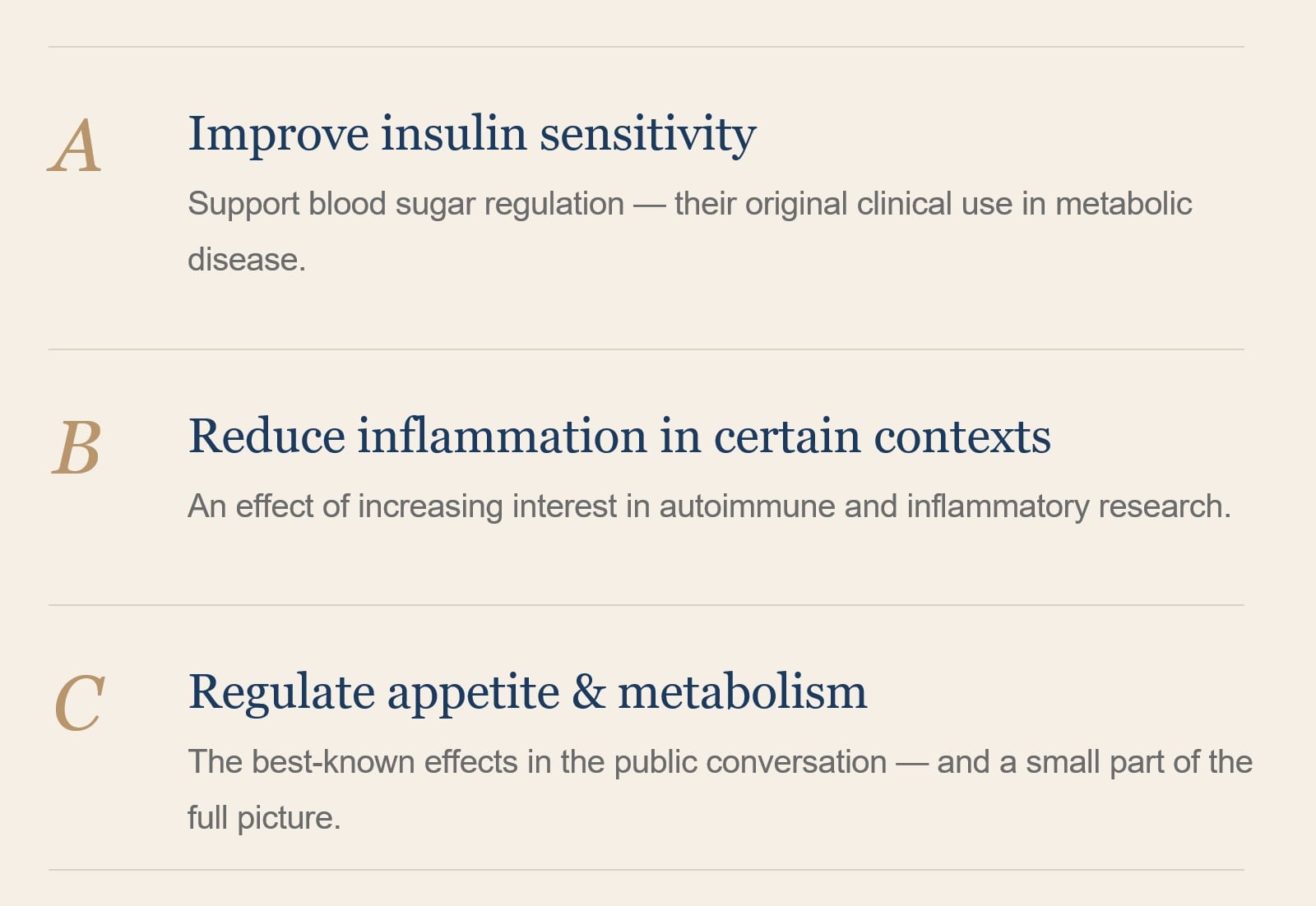
Could GLP-1 Medications Help Endometriosis?
This is an active area of research, here’s the honest breakdown.
What the science suggests:
Endometriosis is linked to lower GLP-1 in pelvic fluid
GLP-1 has anti-inflammatory and metabolic effects
Supporting GLP-1 signaling could help the inflammatory environment
What the science does not yet show:
No large clinical trials prove GLP-1 medications treat endometriosis
GLP-1 medications do not shrink or remove lesions
They are not a cure for the disease
GLP-1 receptor agonists, including semaglutide and tirzepatide, are FDA-approved for specific metabolic indications. Use outside those indications is off-label and should only be considered in consultation with a qualified clinician.
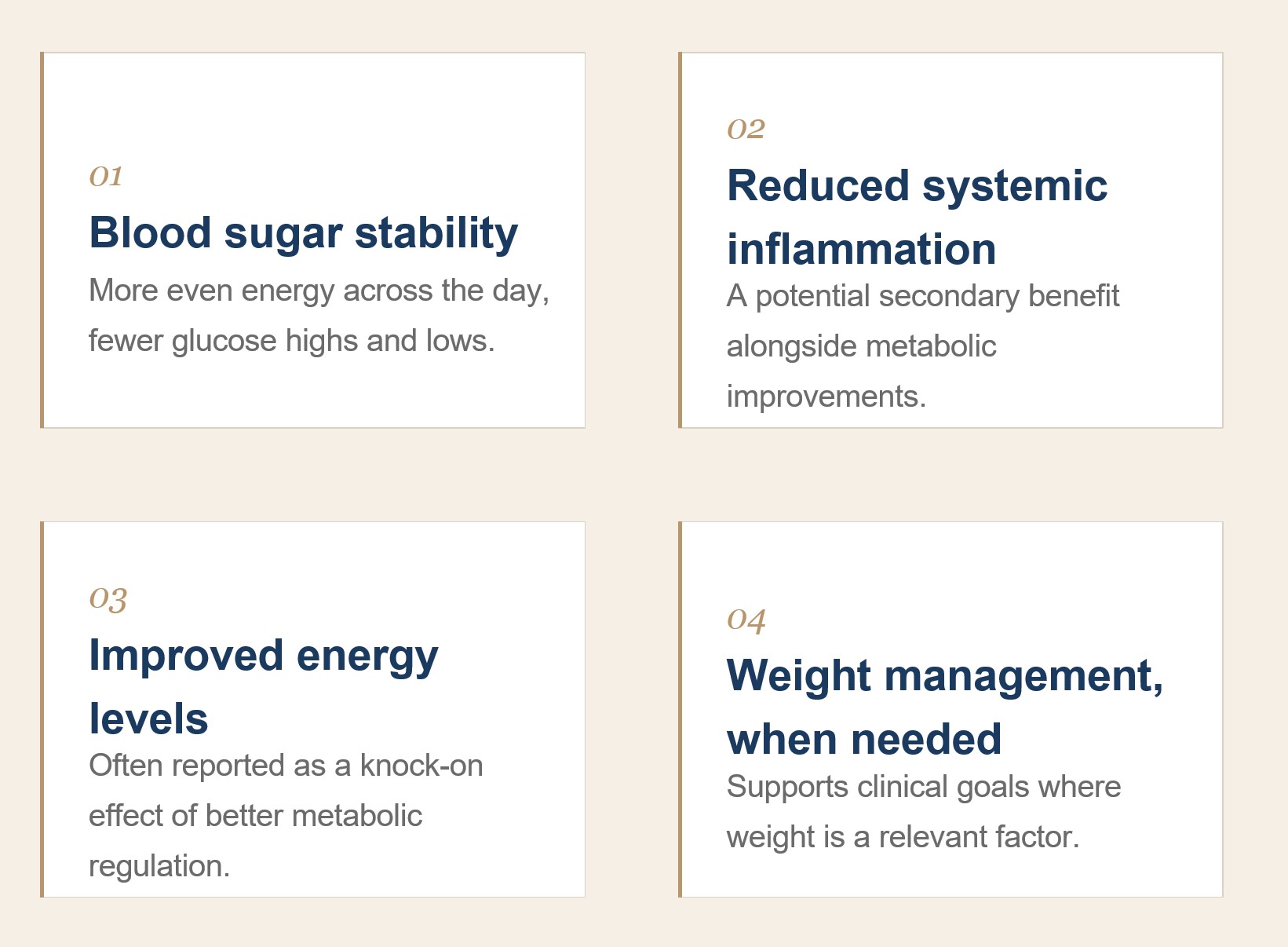
Supportive, not curative
Where GLP-1 meds may support overall health.
For the right patient, these medications can improve well-being — which can influence how symptoms feel — but they are not a direct treatment for the disease.
A WHOLE-PERSON APPROACH
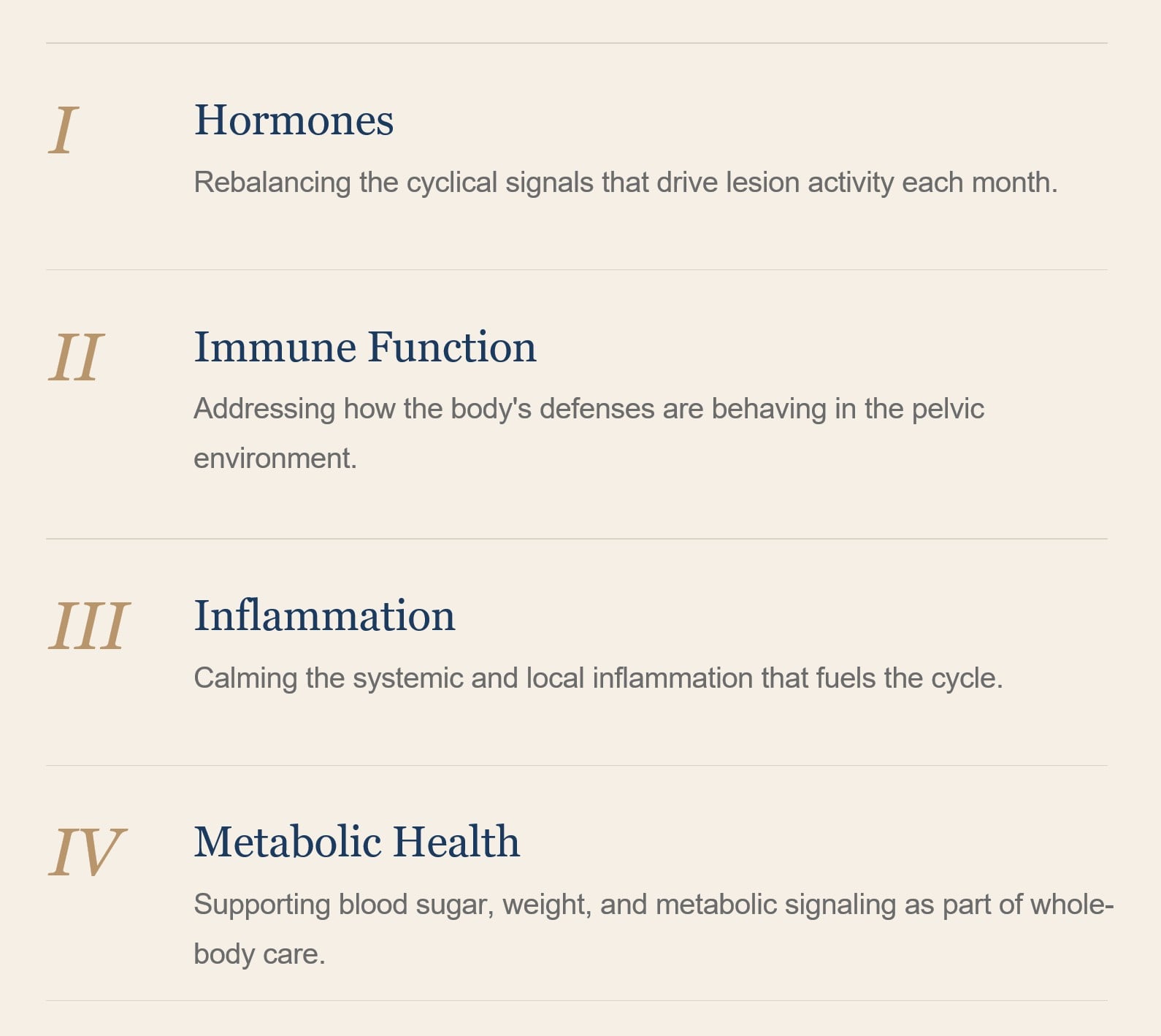
Four systems, one plan.
Because endometriosis involves multiple systems, the best outcomes come from addressing each of them together — layered and individualized. GLP-1 medications may play a role for some people – but only as one piece of a larger strategy.
If any of these sound like you
Diagnosis and treatment should always be individualized. A consultation is a low-pressure way to start the conversation.
Severe period pain
Pain that interrupts your life – not just your day.
ongoing pelvic pain
Pain that persists outside of your menstrual cycle.
pain with sex or digestion
Symptoms that come with intimacy or bowel & bladder activity.
fertility concerns
Whether you are trying to conceive now, or planning ahead.