
PCOS & Hormone Health
A Patient-Friendly Guide to Symptoms, Treatment and GLP-1 Medications.
Learn how PCOS and estrogen dominance are connected, and explore treatment options including GLP-1 medications and progesterone therapy for hormone balance and metabolic health.

What is PCOS?
A common hormone and metabolic condition.
Polycystic Ovary Syndrome affects how the ovaries work — and ripples out to influence your menstrual cycle, metabolism, and overall health.
Despite the name, not everyone with PCOS has visible cysts on their ovaries. The diagnosis is a pattern of hormonal and metabolic features — and that pattern presents differently from person to person.
Common Symptoms of PCOS
The signs we see vary widely.
PCOS looks different for everyone — two patients with the same diagnosis can present in very different ways. Symptoms can include:

A Key Insight: PCOS and Hormone Balance
Estrogen dominance often isn’t about too much estrogen; it’s about too little progesterone to balance it.
The ratio matters. You can have perfectly normal estrogen and still experience the symptoms of estrogen-heavy physiology if progesterone is low.


Improving insulin resistance is one of the most important steps in managing PCOS. It touches ovulation, weight, cycle regularity, and long-term metabolic health — all at once.
THE INSULIN RESISTANCE CONNECTION
When the metabolic signal gets dampened.
Insulin resistance means the body has trouble using insulin efficiently — so more is produced to get the same effect. Those elevated levels ripple outward into almost every piece of the PCOS picture.

When this happens:
- Insulin levels rise across the day.
- Ovulation becomes less regular.
- Weight gain becomes easier, loss harder.
- Hormone imbalances — including low progesterone — deepen.
Treat the metabolic root, and many of the hormone symptoms soften along with it.
The Inflammation Cycle
A loop that can reinforce itself.

Breaking this loop — addressing metabolism and hormones — is what modern PCOS care is trying to do.
HOW GLP-1 MEDICATIONS MAY HELP
Originally for diabetes. Now a tool in PCOS care.
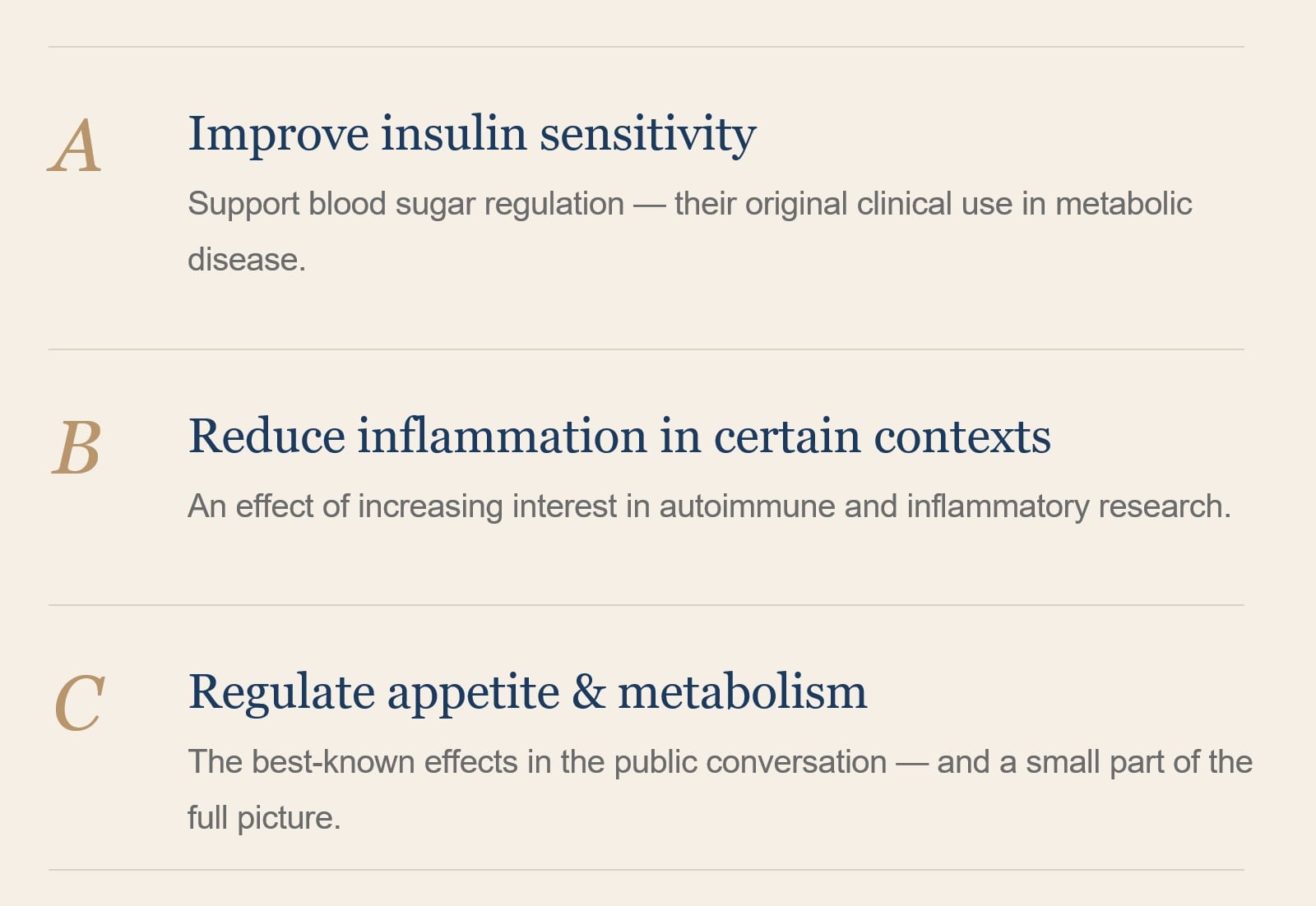
GLP-1 receptor agonists like semaglutide and tirzepatide were first used in type 2 diabetes, and later for weight management. In the PCOS context, they’re interesting because they target the metabolic layer that drives so many of the downstream hormone issues.

These medications require a prescription, may cause nausea or digestive symptoms when starting, and work best combined with balanced nutrition, sleep, stress management, and resistance training. This content is educational and not a substitute for individual medical advice.
- Do GLP-1 Analogs Have a Place in the Treatment of PCOS? New Insights and Promising Therapies
- The efficacy and safety of GLP-1 agonists in PCOS women living with obesity in promoting weight loss and hormonal regulation: A meta-analysis of randomized controlled trials
Could GLP-1 Medications Help PCOS?
What GLP-1 medications can – and cannot – do.
What the science suggests:
- Improve insulin sensitivity, a root driver of PCOS
- Support sustainable weight loss when that’s a goal
- Help restore more regular cycles over time
- Reduce metabolic inflammation indirectly
What the science does not yet show:
- Not a direct “hormone fix”
- Not a replacement for progesterone when it’s low
- Not a standalone treatment for PCOS
- Not a substitute for lifestyle foundations
GLP-1 receptor agonists, including semaglutide and tirzepatide, are FDA-approved for specific metabolic indications. Use outside those indications is off-label and should only be considered in consultation with a qualified clinician.
Why Progesterone Matters
Progesterone is a balancing hormone. When ovulation is irregular — as it often is in PCOS — progesterone stays low, and the symptoms of estrogen dominance move in.
What low progeserone can lead to:
- Irregular or heavy periods.
- Estrogen dominance symptoms.
- Poor sleep.
- Mood changes and anxiety.
How progesterone therapy helps:
Balances the effects of estrogen, regulates cycles, protects the uterine lining, and — for many patients — improves sleep and mood. Common forms include oral progesterone capsules and cyclical therapy taken part of the month, always prescribed and monitored.
A BALANCED TREATMENT APPROACH
Hormones and metabolism, addressed together.
SUPPORT YOUR METABOLISM
- GLP-1 medications when clinically appropriate
- Balanced meals — protein, fiber, healthy fats
- Consistent physical activity
- Blood sugar & insulin labs to track progress
BALANCE YOUR HORMONES
- Progesterone therapy where indicated
- Restore ovulation when possible or desired
- Hormone testing, repeated over time
- Adjust the plan to your phase of life
BUILD THE FOUNDATION
- Prioritize sleep and recovery
- Manage stress actively, not passively
- Reduce highly processed foods
- Resistance training twice a week
Small, consistent changes almost always outperform dramatic short-term overhauls. The plan should be something you can still be doing in a year.
HOW GLP-1 MEDICATIONS WORK
Mimicking a hormone the body already makes.
Medications like semaglutide and tirzepatide are “GLP-1 receptor agonists” — they mimic the action of the body’s own GLP-1.

A few signals worth bringing into the clinic.
Treatment should always be tailored to your individual labs, goals, and season of life — not a template.